
You can set up a smooth, skate-ready dance floor at home in about 15 minutes using interlocking hard tiles — no glue, no tools, no permanent changes to your garage, basement or backyard. Here's exactly how much space you need, how many tiles to order, and how to lay them down.
Why roller dancers are building floors at home
Roller dance — from classic jam skating to the vibe skating flow style taking over Instagram and TikTok — needs one thing above all: a smooth, consistent surface. Asphalt eats your wheels and your knees. Skate parks are crowded. Indoor rinks have opening hours.
A home practice floor means you can drill your crazy legs, downtowns and spins every day — even 20 minutes between work calls.
What surface do roller skate dancers use?
| Surface | Smoothness | Outdoor use | Setup | Verdict |
|---|---|---|---|---|
| Asphalt / concrete | Rough to OK | Yes | None | Hard on wheels and joints |
| Indoor wood / laminate | Great | No | Existing floor | Scratches — your family won't love it |
| Interlocking hard tiles | Smooth, consistent | Yes — all weather | 15 min, no tools | Best of both worlds |
InOut Flooring hard tiles are made in Europe from impact-resistant polypropylene, lock together at 25 fixation points per tile, and give wheels a smooth, predictable roll that's gentle on them — the same reason Rolleg Roller Skating School trains on them.
How many tiles do you need?
Each tile is 33 × 33 cm. Here's what the most popular practice spaces take:
| Practice space | Size | Grid | Tiles needed |
|---|---|---|---|
| First-moves corner | 2 × 2 m | 6 × 6 | 36 |
| Solo dance square | 3 × 3 m | 9 × 9 | 81 |
| Duo / full routine | 4 × 4 m | 12 × 12 | 144 |
Don't do pack math by hand — open the Floor Calculator on the Hard Tiles page, type your width and length, and it picks the cheapest pack combination for you and shows your exact grid layout. Want a two-colour floor with a marked centre? Start from the Hard Tiles Mix pack.
Setting it up: 4 steps
- Pick a flat base — concrete, asphalt, an old terrace, a garage floor. Small cracks are fine; big holes are not.
- Snap the tiles together row by row — they lock on all four sides. No glue, no screws.
- Leave a small gap at the walls so the floor can expand in the sun.
- Skate. Moving house? Unclip the floor and take it with you.
Indoors or outdoors?
The same tiles work in a basement in January and in the backyard in July. They're weather-resistant, drain rain through the grid, and won't warp in the cold — so your floor can stay outside all year.
FAQ
Do interlocking tiles damage roller skate wheels?
No — the smooth polypropylene surface is gentler on wheels than asphalt or raw concrete.
How loud is skating on tiles? Can I practice in an apartment?
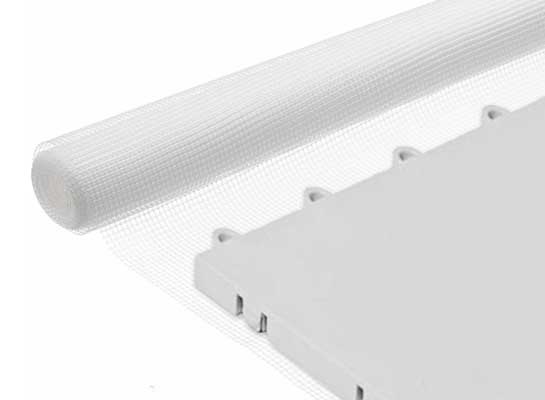
Rolling on hard tiles is noticeably quieter than on raw concrete, and you can reduce the sound further by laying our Anti-Slip Mat underneath — it dampens vibration and keeps the floor firmly in place.
Can I dance on the tiles in shoes too?
Yes — the tiles are built for multi-sport use, from floorball to dance battles: we've floored the Ghetto Games 3×3 and dance events.
What base do I need under the tiles?
Any firm, reasonably flat surface: concrete, asphalt, pavers or an existing indoor floor. On smooth indoor floors, add the Anti-Slip Mat so the floor stays put during fast footwork.